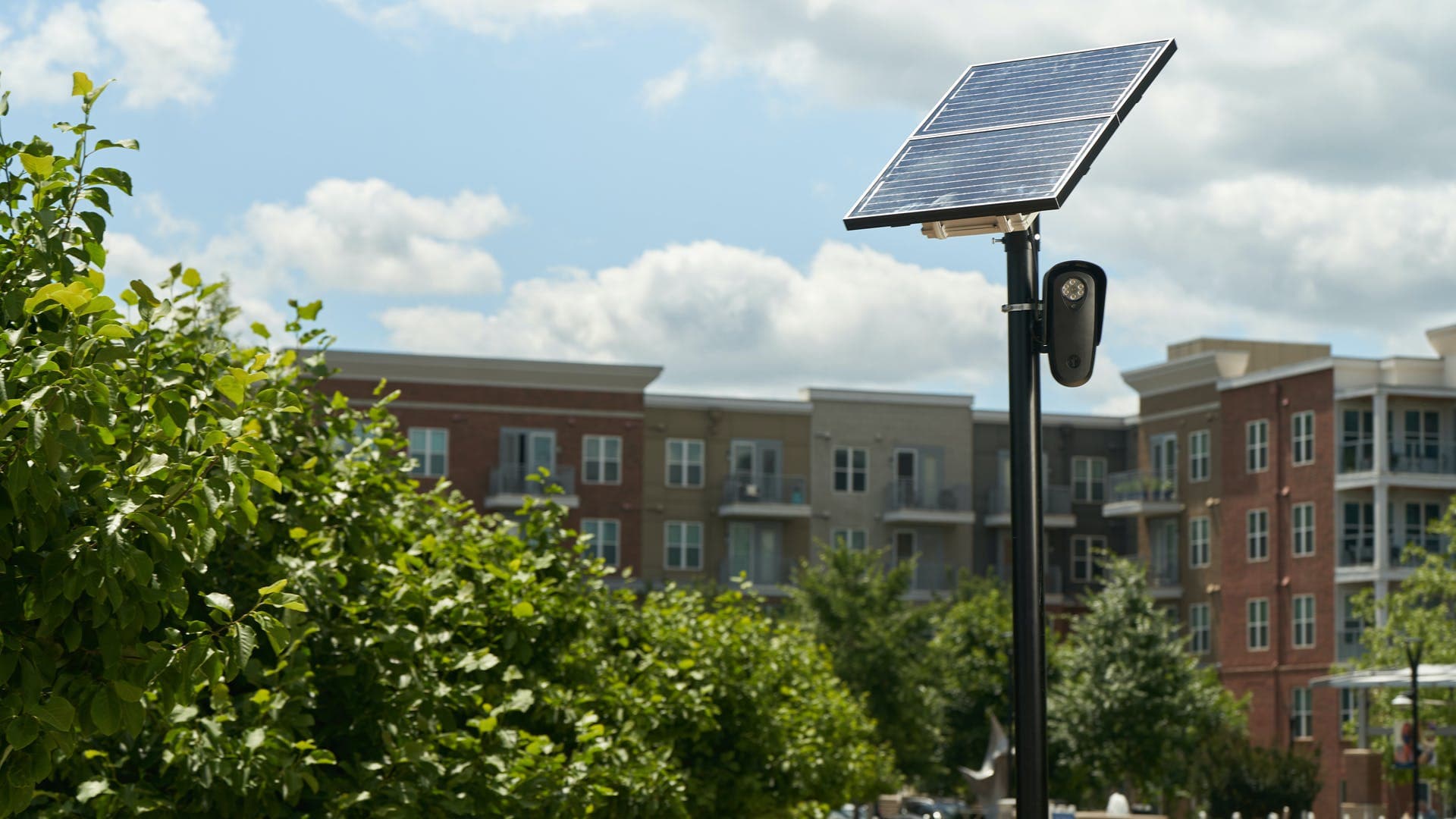
On November 16, 2022, Tracy Press reported that 46 Flock Safety automatic license plate reading cameras had been installed at 15 intersections within city limits. Tracy Police had received a $225,000 federal grant for the cameras and moved forward with the installation on existing traffic signal or light poles – or installed new ones – in “key locations” across the city.
“The purpose of the cameras is to only read the license plate; they do not capture anything inside a vehicle. It reads the license plate and takes that data as the vehicle drives by and captures either the front or rear license plate and runs it in the state database for stolen vehicles or vehicles that are entered into our system as felony wanted vehicles, for instance carjacking, missing persons, stolen license plates.” – Tracy Police Lt. Tim Bauer
Since that initial installation of the cameras, criticism of their use in communities has exploded nationally, with citizens and politicians alike expressing their growing concern of them being used in ways that they were not originally thought they would be when approved for installation. The criticism is one of the few topics that is truly bipartisan in an age of heated partisanship. Republican Congressman Scott Perry (R – Pennsylvania) is one of the voices within the GOP speaking out against the use of Flock cameras.
"Flock and Flock-like cameras track where law-abiding people go, who they visit, and how they live - all without a warrant. I attempted to stop this with an amendment, which unfortunately failed recently in Committee; that’s not the end of this, though. The mass surveillance of the American People must end. Call your legislators. STOP THE FLOCK." - Scott Perry
Another Republican, Thomas Massie (R – Kentucky), introduced H.R. 10221, known as the “Flock-Off Act, in September 2026, with the goal of preventing the use of federal funds to purchase, install, maintain, operate, or upgrade automated license plate readers and biometric surveillance cameras.
"The federal government shouldn't provide 'security' grants to cities and police departments that have gone beyond the pale and turned their communities into a version of 1984. The Flock-Off Act withholds federal money from municipalities and police departments that deploy Flock cameras to surveil law-abiding citizens." – Thomas Massie
Besides the concerns of turning our country into a surveillance state (or more so than it already is…), there has been widespread abuse by law enforcement of the cameras. As of June 2026, there have been over a dozen documented cases across multiple states showing how law enforcement officers have used Flock Safety’s network to stalk ex-partners and conduct unauthorized surveillance, resulting in criminal charges and terminations. Currently, Flock’s system places no built-in requirement on officers to document search justifications, with no automated flagging when the same person is queried repeatedly outside an active case.
Despite the city councils of many cities nationwide voting to install or expand their use of Flock cameras, the backlash against them is growing. In September 2026, the City of Boston dumped its Flock camera program after learning that the data it collected was not shared exclusively to Boston Police, as intended, but was accessible to outside law enforcement nationwide. Additionally, the Wisconsin cities of Racine, Oconomowoc, and Waukesha joined other Wisconsin cities that include Kenosha and Sheboygan – as well as several county law enforcement agencies - in terminating their use of Flock cameras. Currently there are over 214 cities and towns in the U.S. that have either cancelled or deactivated Flock Safety camera programs, including significant numbers from various states such as California, Florida, Texas, and New York.
It should come as no surprise that President Trump, for his part, is a fan of Flock cameras, continuing his long-time push for unchecked police power, stating he supports their use simply because law enforcement does, regardless of how they can be misused and abused.
"I sort of like them," Trump said, "because of law enforcement. Some people don't. They think it's an infringement. But I like them."
During his presentation Tracy’s City Council regarding the consideration of the expansion of Tracy’s use of Flock cameras, Tracy Chief of Police Sekou Millington cited their usefulness as a tool for helping keep the citizenry of Tracy safe.
“We remain committed to the safety, privacy, and trust of all Tracy residents. Our policies and practices will continue to be evaluated to ensure they align with California law and reflect the values of our community. I believe it goes without saying that the use of technology inherently has its flaws, which is why we diligently strive to audit and safeguard the system we utilize. The fact remains that the safety of our community is our top priority, and there is no better system than the Flock platform to aid us in doing just that.” - Sekou Millington, Tracy Chief of Police
While Chief Millington has also noted that the Tracy Police Department maintains a strict adherence to California law when it comes to the use of ALPR and Flock cameras, including SB 54 (“California Values Act”) and SB 34 (“ALPR Data Sharing Restrictions”), does not share their data with federal agencies, and has not received any requests to do so, it is clear that this can and has occurred elsewhere. In June 2026, it was reported that federal and out-of-state agencies did indeed access San Francisco’s license plate data gathered through the police department’s system of cameras. Since San Francisco installed their system in 2024, there were 299 illegal inquiries of SFPD’s Flock camera network over the course of a single year. Between 2024 and 2025, SFPD allowed out-of-state agencies to access its Flock data 1.6 million times, even though California law prohibits law-enforcement agencies from sharing license plate data to any out-of-state entity. Such data can be used to track drivers’ locations and movements, and elsewhere it has been used by immigration agents for years. As reported by the ACLU:
“Documents obtained by the ACLU of Massachusetts reveal that police across the state are collecting detailed information about the locations of Massachusetts drivers and sharing that information with a network of over 7,000 agencies and organizations all over the country — including in states that have passed laws banning abortion and gender-affirming healthcare for minors, and laws requiring police to conduct civil immigration enforcement operations.
The records and other publicly available information confirm that over 80 Massachusetts police departments have entered into contracts to deploy Flock Safety’s automatic license plate reader (LPR) technology to surveil drivers when they pass one of Flock’s cameras on the roads. Over the past three years, Massachusetts police have spent over $2 million in taxpayer funds on this technology. Many of these departments have been sharing LPR data collected in their jurisdiction with Flock to be entered into its national database, where it can be accessed by thousands of out-of-state police departments and even federal agencies.
At minimum, this dragnet surveillance means warrantless tracking of everyone on the road. At worst, it means a digital police state wherein law enforcement officials in far-flung jurisdictions outside of Massachusetts can track protesters, political opponents, immigrants, patients, and others not suspected of any crime and use the information to hurt them.”
So, it does happen…and it is happening with increasing frequency.
In July 2026, the Tracy City Council approved an agreement to expand the city’s installation and use of Flock cameras, increasing its network to 74 license plate readers and 48 pan-tilt-zoom cameras, plus a trailer that has both types of cameras and can be deployed anywhere around town.
The approval was unanimous.
In September 2026, a hacker collective calling itself “Stegan0gram,” tore down a roadside Flock camera and gained access to its encryption key, unlocking thousands of videos and software they say has been designed to detect people as well as vehicles. According to CyberNews.com, the hacker group dismantled camera and made a near-complete copy of its stored data, then shared the material with 404 Media and the transparency nonprofit Distributed Denial of Secrets, who provided it to Wired for analysis. While Flock Safety insists that its plate readers do not track people, the investigative reverse engineering of the camera found that the recovered software explicitly detects people, alongside vehicles, bicycles, and license plates. When Wired reporters extracted the camera’s computer vision models and tested them independently, it successfully detected people, including taking a selfie of one of its reporters.
The nationwide backlash, and the mounting evidence that Flock’s claims of respecting citizen’s privacy and civil rights clash with their technology and its potential abuse, make it clear that the technology is in dire need of regulation and safeguards.
"This is the biggest, most grassroots privacy backlash that I've ever seen in more than 20 years working on these issues. It just shows people don't like mass surveillance." - Jay Stanley, senior policy analyst at the American Civil Liberties Union's Speech, Privacy, and Technology Project